
During high-risk orthopedic, neurological, and vascular procedures, the nervous system is vulnerable to injury that can have life-altering consequences. Evoked potentials are among the most powerful tools available to surgical teams for detecting that risk before it becomes permanent damage.
Texas IOM provides four evoked potential modalities as part of a comprehensive intraoperative neuromonitoring (IONM) approach: Somatosensory Evoked Potentials (SSEPs), Motor Evoked Potentials (MEPs), Transcranial Motor Evoked Potentials (TcMEPs), and Brainstem Auditory Evoked Potentials (BAEPs). Each targets a different part of the nervous system, and together they provide a complete picture of neurological function throughout surgery.
Somatosensory Evoked Potentials (SSEP)
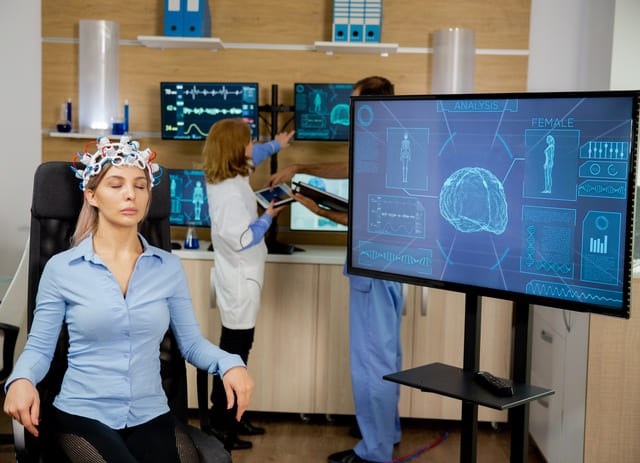
SSEPs evaluate the conduction of electrical signals along the sensory pathways of the nervous system. Small, safe electrical pulses are delivered to peripheral nerves — such as the ulnar nerve in the wrist or the tibial nerve at the ankle — and responses are recorded as the signal travels up to the brain.
In the operating room, SSEPs continuously assess the integrity of the dorsal columns of the spinal cord, which carry touch and vibration signals. Because sensory pathways are highly sensitive to changes in blood flow, a drop in SSEP signal amplitude or an increase in signal delay can alert the surgical team to compromised blood supply or excessive traction — often long before permanent nerve damage would occur.
Motor Evoked Potentials (MEP)
Where SSEPs monitor the sensory pathway into the brain, MEPs monitor the motor pathway out of it. This modality assesses the functional integrity of the motor cortex and the descending corticospinal tracts that control voluntary muscle movement.
Damage to the spinal cord can selectively affect motor function while leaving sensory pathways fully intact. Relying on sensory monitoring alone could allow a critical motor deficit to go undetected. MEPs provide a continuous functional check of the anterior spinal cord, giving the surgical team immediate feedback if a maneuver — such as placing a spinal screw or correcting a curvature — compromises a motor pathway.
Transcranial Motor Evoked Potentials (TcMEP)
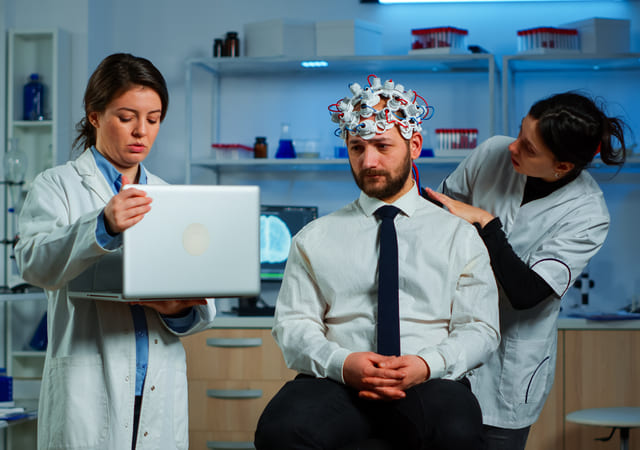
TcMEPs are a specific and highly sensitive method of eliciting motor evoked potentials. Rather than stimulating the spinal cord directly, a brief series of electrical pulses is applied across the patient's scalp to stimulate the motor cortex of the brain. The resulting activity is then recorded from the muscles of the arms and legs using electromyography (EMG).
TcMEPs monitor the entire length of the motor pathway — from the motor cortex through the brainstem, down the spinal cord, across the peripheral nerves, and into the muscles. This makes them the gold standard for real-time motor pathway tracking under general anesthesia, particularly during tumor resections and complex spinal deformity corrections where immediate feedback on critical maneuvers is essential.
Brainstem Auditory Evoked Potentials (BAEP)
BAEPs evaluate the auditory nerve and the vital neural pathways running through the brainstem. While the patient is under anesthesia, repetitive acoustic clicks are delivered through inserts placed in the ears, and the brain's electrical responses are recorded through scalp electrodes.
During posterior fossa procedures, acoustic neuroma resections, and skull base surgeries, the brainstem and cranial nerve VIII are at significant risk. BAEPs track these deep pathways in real time, providing early warning of brainstem stress. Because the brainstem governs fundamental functions including breathing and heart rate, continuous BAEP monitoring helps protect both hearing and patient safety throughout these high-stakes procedures.
The Case for Multi-Modality Monitoring
No single test covers the entire nervous system. Using SSEPs, MEPs, TcMEPs, and BAEPs together provides a comprehensive, multi-directional view of neurological health throughout the course of surgery. By alerting the surgical team to stress on the nervous system within seconds, this multi-modality approach gives surgeons the opportunity to intervene — and significantly reduces the risk of post-operative neurological deficits.
Texas IOM's CNIM-credentialed technologists and real-time physician oversight team apply the right combination of monitoring modalities to every case based on the procedure, the patient, and the risks involved.

GET STARTED
Ready to Schedule a Case or Learn More?
Our team is easy to reach. Whether you are scheduling your first case or want to learn more about what we do, we are happy to talk.
© Copyright 2026 | All Rights Reserved Texas IOM | Terms & Conditions | Privacy Policy